Search
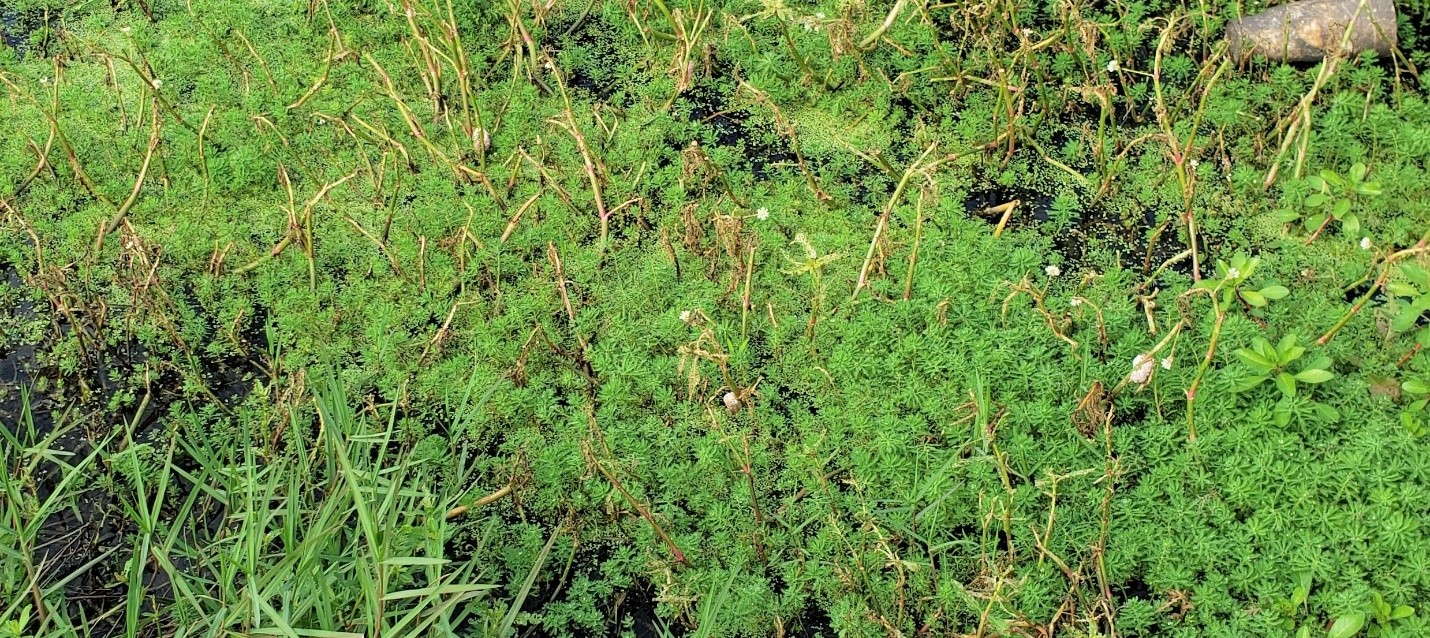
Figure 1. Parrot feather infestation in Gramercy, Louisiana on February 2019.
Parrot feather is an aquatic weed native to the Amazon Basin of South America that has spread to every continent outside of its native range [5, 10]. Originally introduced to the US due to its’ popularity in aquatic gardens and aquariums, it has now spread throughout North America and is severely impacting aquatic ecosystems [10].
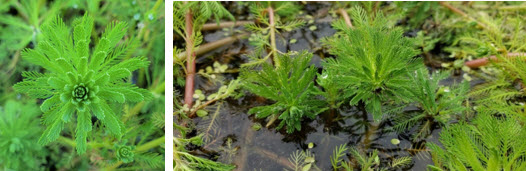
Figure 2. Parrot feather buds.
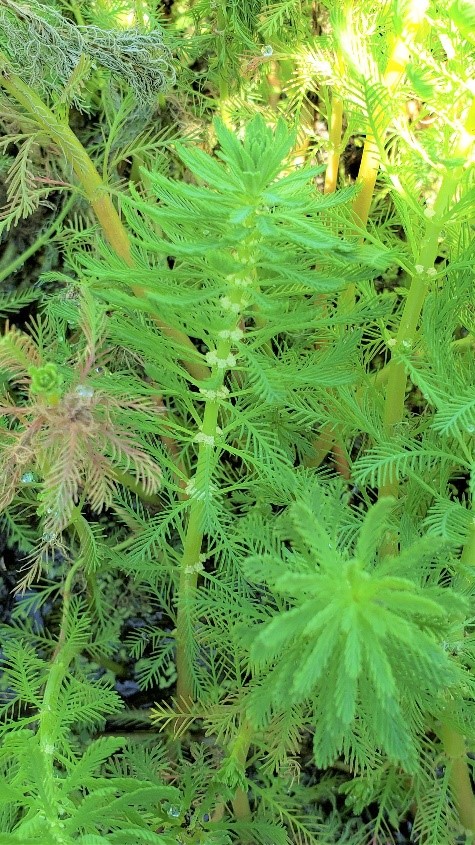
The emergent stems of parrot feather can be easily recognized by its feather-like foliage (Figure 1, 2), green leaves, and their small, white flowers that grow along the stems (Figure 3) [12]. The emergent stems are reddish-brown and can grow to nearly a foot above the water’s surface. Parrot feather is often heterophyllous, meaning it has two distinct leaf types [12]. The leaves on the emergent portion of the plant are pinnately compound with 20 or more leaflets and are 1- 1.4 inches long [5, 12]. These leaves are stiff and whorled and occur at every node of emergent stem. The submersed leaves are also pinnately compound, but their leaflets are shorter and more hair-like and flexible than the emergent leaves [12]. These leaves are reddish-green in coloration.
Figure 3. Parrot feather plant with flowers along stem.
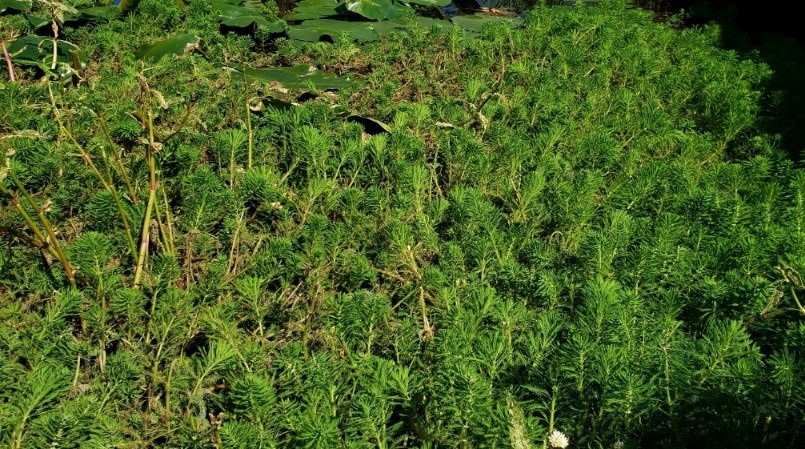
Figure 4. Parrot feather infesting a drainage canal in Gramercy, Louisiana.
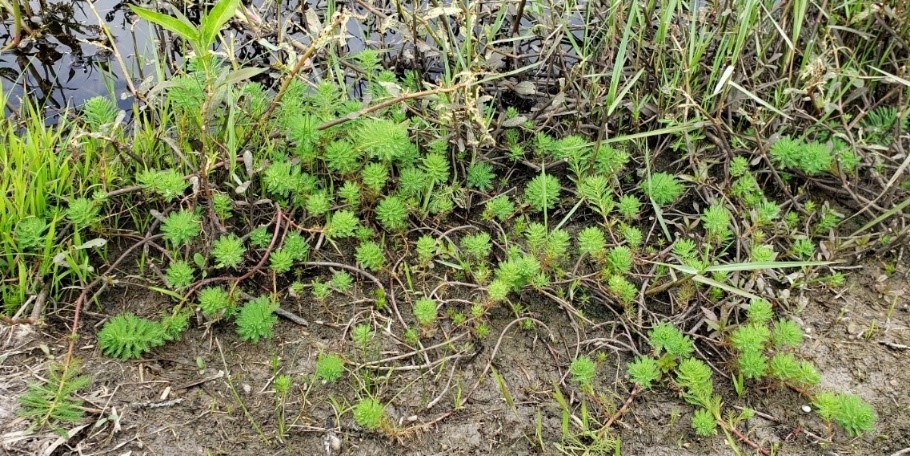
Figure 5. Parrot feather growing in moist soil along shore of a canal.
Parrot feather prefers shallow, slow moving, nutrient-rich streams, lakes, and canals, though it can survive in a wide range of aquatic conditions (Figure 4) [5, 11]. It is commonly found in ditches, ponds, swamps, and bayous. While the main stem and roots of the plant are often submerged, the plant will often be found growing in moist soil along bodies of water (Figure 5) [5].
Only female plants are present outside of parrot feather’s native range, meaning no sexual reproduction occurs in North America [3, 11]. Male plants are rare even in the plant’s native range and seed production has not been documented [11]. However, the plant easily reproduces and spreads through vegetative reproduction, whereby it essentially creates “clones” of itself [11, 12]. These “clones” can break off from the original plant and disperse via water currents to colonize new areas [11, 12].
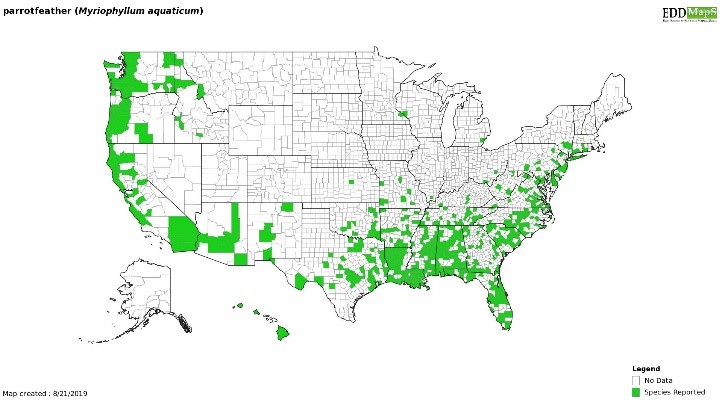
Figure 6. Distribution of parrot feather in United States. Image courtesy of EDDMaps.
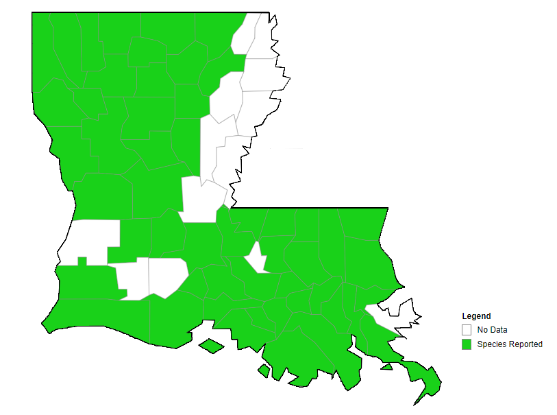
Figure 7. Distribution of parrot feather in Louisiana. Image courtesy of EDDMaps.
The earliest known record of parrot feather in the United States was in New Jersey in 1890 [12]. Since then, it has spread aggressively throughout North America. This plant was first reported in Louisiana in 1915 [12], and now, the plant is present in over 30 U.S. states (Figures 6, 7) [5, 12]. The aquarium trade has been largely responsible for its dispersal as an attractive pond plant [10].
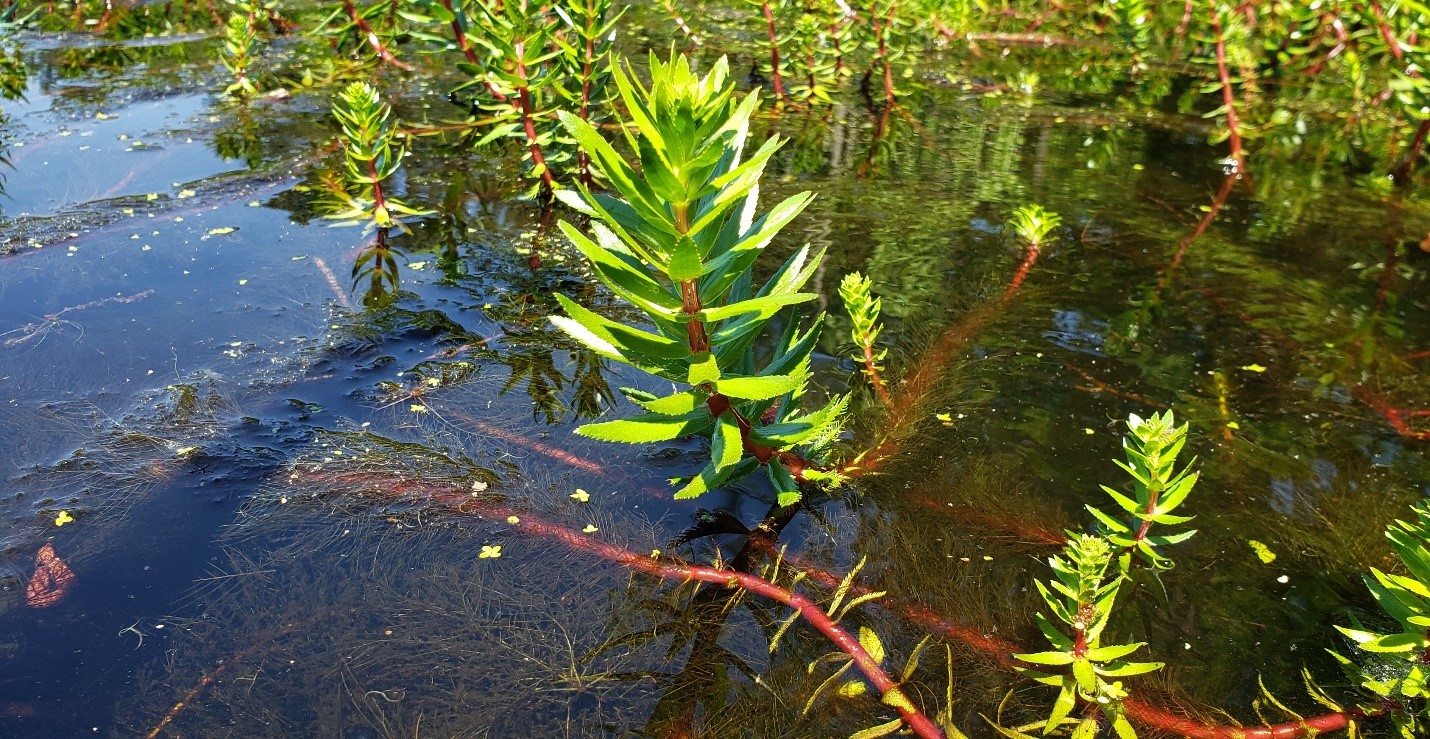
Figure 8. Emergent stem of variable leaf milfoil (Myriophyllum heretophyllum).
Myriophyllum is a very diverse genus, containing nearly 70 species worldwide [2]. Ten species are native to North America[1]. Native watermilfoils with heterophyllous growth form include cutleaf watermilfoil (M. pinnatum), variable leaf milfoil (M. heterophyllum) (Figure 8), western watermilfoil (M. hippuroides), whorled watermilfoil (M. verticullatum), and low water milfoil (M. humile)[1]. The other natives exhibit a growth form similar to Eurasian watermilfoil (M. spicatum), which only has spikes bearing flowers and fruits growing above the water’s surface [1].
Parrot feather can form dense mats of stems and floating stolons that impede boat traffic, which can decrease the recreational value of waterbodies. This can also increase the severity and duration of floods by preventing the outflow of water [12]. These dense monocultures can outcompete and displace native plants that benefit wildlife, like waterfowl, and fish. Parrot feather may also have a negative impact on public health as infestations can provide excellent habitat for disease-carrying mosquitos [9].
Complete control of this invasive weed using chemical or manual methods is difficult. Many pesticides struggle to penetrate the waxy surface of the emergent stem or reach the submersed parts of the plant in toxic and environmentally safe quantities [12, 13]. Manual control is unreliable, expensive, and labor intensive as the plant reproduces via fragments and therefore, any remaining pieces of the plant could allow it to recolonize an area [12, 13].
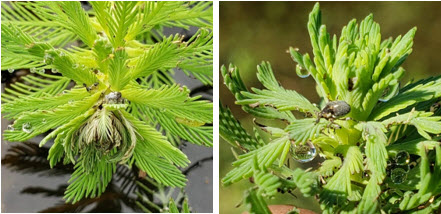
Figure 9. Phytobius vestitus on the bud of parrot feather.
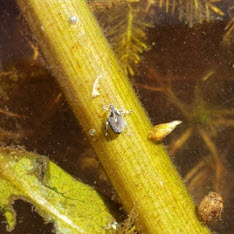
Figure 10. P. vestitus on parrot feather stolon.
A population of Phytobius vestitus, a weevil which eats watermilfoils, was discovered feeding heavily on parrot feather throughout the southeastern USA (Figures 9, 10). This weevil is being monitored to assess its potential as a biological control agent. Phytobius vestitus was found to reduce parrot feather densities; however, the extent to which the insect is able to control the plant is unknown.
Another weevil, Pelenomus canaliculatus (Figures 11, 12), which is closely related to Phytobius vestitus, was found feeding on parrot feather in one site in southern Louisiana. Pelenomus canaliculatus feeds on the buds and leaves of parrot feather and pupates on the surface of the emergent leaves (Nathan Harms, personal communication, January 23, 2019). This weevil seems to be much less widespread in North America than P. vestitus and far less is known about it. P. canaliculatus is native to the temperate regions of Europe and Asia [7]. No information regarding the introduction of this weevil to North America exists. Due to the lack of information on this weevil, Phytobius vestitus will be the primary focus of the “Biological Control” section.
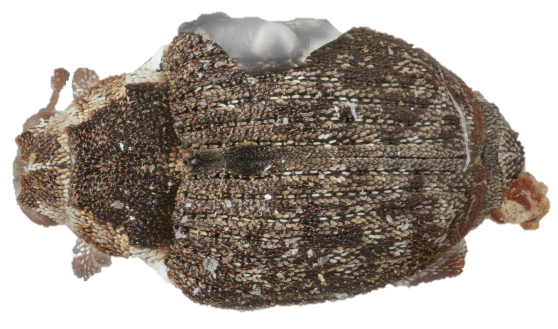
Figure 11. Dorsal view of Pelenomus canaliculatus.
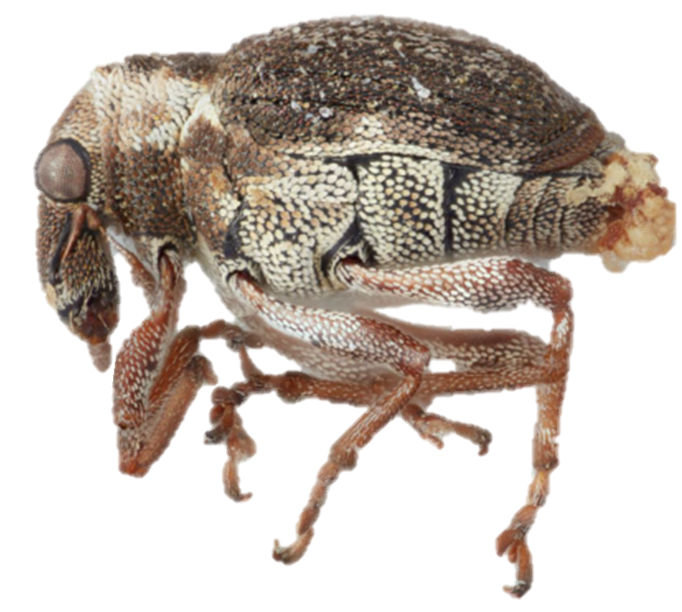
Figure 12. Lateral view of Pelenomus canaliculatus.